
Article • May 7, 2025
What is Mid-Century Modern Design and How to Spot Mid-Century Modern Facades
By IMSU Team
- Published May 7, 2025 | Updated July 16, 2026 | 1 minute read
Download Now
Trending Home
Facade Styles
details
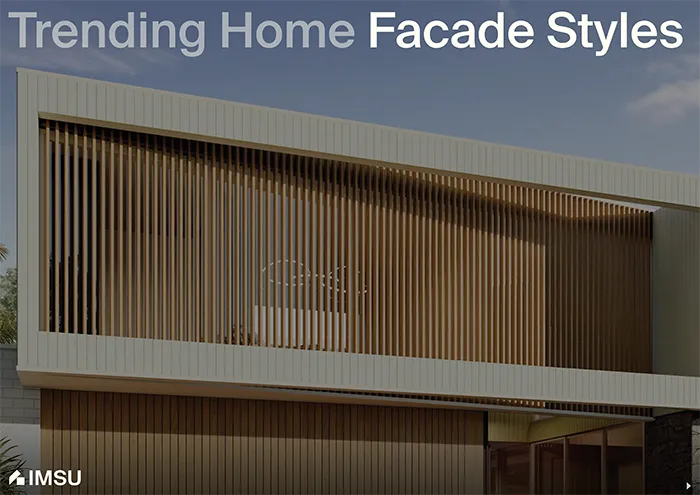
What Defines Mid-Century Modern Design?
Often shortened to MCM, Mid-Century design is precisely that: designing with the middle of the 20th century in mind. Specifically, from the 1930s to the 1970s, Mid-Century Modern Design is known to be a very “organic” design fashion. Converse to the ornamental styles fashionable in the art deco at the beginning of the 20th century, Mid-Century design is particularly minimalist. Some notable examples of mid-century design include some of the shots from “Once Upon a Time in Hollywood”, the iconic house in the background of “Desert House Party 2” by Slim Aarons, and most notably, “The Eames House” by Charles and Ray Eames.
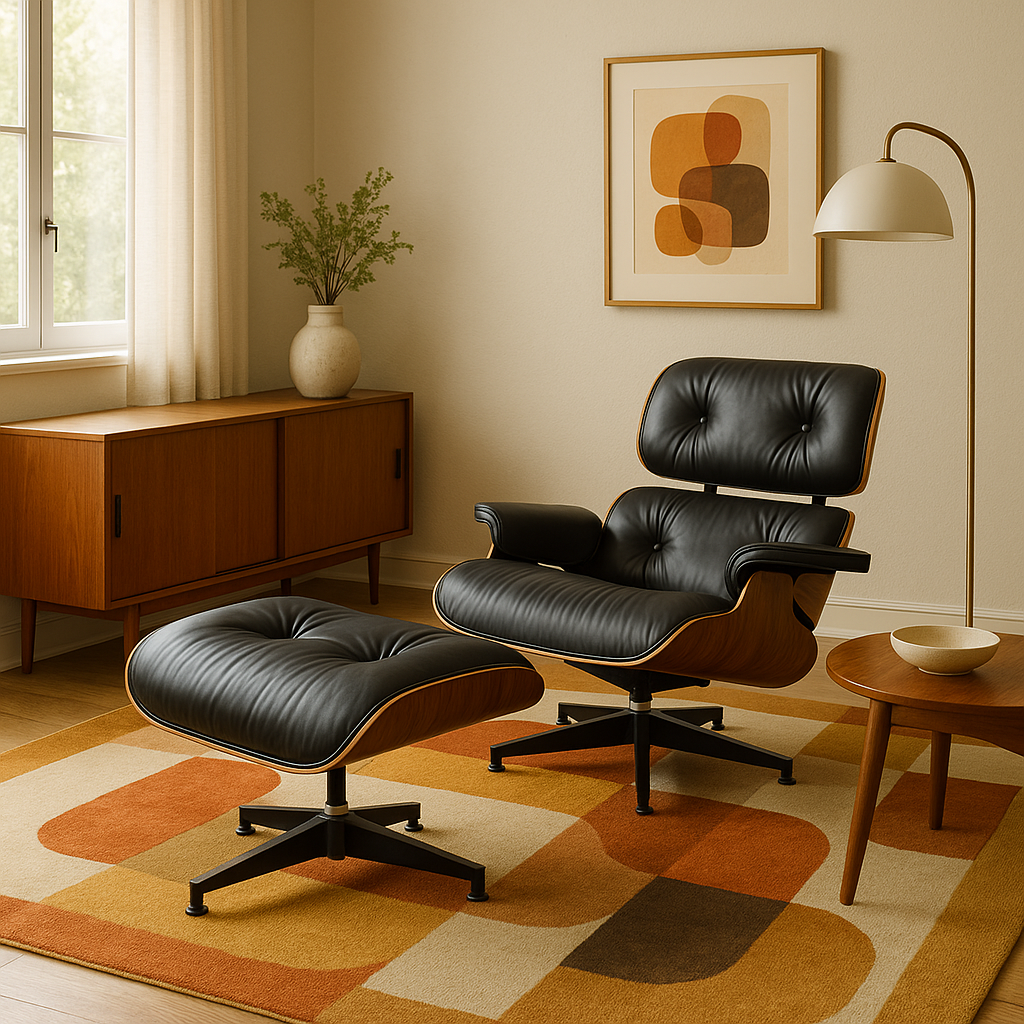
How To Spot Mid-Century Modern Design
- ColoursDespite the early palettes of Mid-Century Design featuring a range of pastels, in the middle and later periods of the movement, earthy tones such as oak, olive green, mustard yellow, khaki, and burnt oranges dominated the palette, especially when contrasted with bold, glossy vinyl colours for accenting.
- MaterialsMost iconically, timber features heavily in most MCM designs, especially in facades. Woods you can expect to see used globally in MCM designs include walnut, rosewood and oak. Due to our precautionary biosecurity laws in Australia, you can expect to see a slightly different lineup featuring Tasmanian oak, western red cedar, spotted gum and blackbutt. Concrete and breezeblocks can create a beautiful mid-century facade, as their flatness perfectly complements mid-century design principles. Lastly, if you have the budget, well-chiselled stone can make a perfect glossy effect that plays with the lighting of the hour.
- Design ElementsPurpose-driven design is debatably the core principle to capturing the essence of mid-century design. In a facade, this generally looks like a flat roof that doesn’t incorporate superfluous angling, which makes construction more difficult than it needs to be. Crisp geometry is also a major player in the design movement; think horizontal planes on a facade. Lastly, the organic nature of the building makes it play with its surroundings rather than against them. Think of features like interior courtyards that blur the line between indoor and outdoor living, or the era’s iconic open-plan layouts. Both are hallmarks of Mid-Century design that still influence contemporary builds today.

Mid-Century Facade Checklist
If you’re out scouting for a Mid-Century Facade or have just seen one where you’re not sure, see if you can score it with 80% or more of these features on our checklist:
- Olive green, oak or khaki in the palette
- Burnt orange or mustard yellow in the palette
- An accent colour panel
- Any flat horizontal planes that aren’t the roof
- A flat or low-pitched roof
- Minimal ornamentation
- Warm lighting
- Exposed wood
- Vertical wood panelling
- Carport or breeze-through garage
- Clean, rectilinear geometry
How to Spot and Find a Mid-Century Facade for Your Home
If you’re in Sydney or New South Wales, we recommend first exploring Turramurra & Wahroonga in the Northern Beaches/Shore. Many Australian facade builders and architects were building MCM homes there post-war. Then, we recommend searching for current designs. If you’re looking to see a mid-century facade in person, then you should visit our “Selene” display home in Box Hill. Or if you want to vie for a deeper understanding, you can always speak to one of our home consultants.

Continue Reading

Article • September 24, 2026
Waiting to Build? Know What Waiting Could Cost
Article • September 14, 2026
IMSU Becomes A Quintuple Finalist at the 2026 HIA NSW Awards
The Housing Industry Association (HIA) has nominated IMSU as a finalist in five different categories for its prestigious 2026 NSW Awards.
Article • August 31, 2026
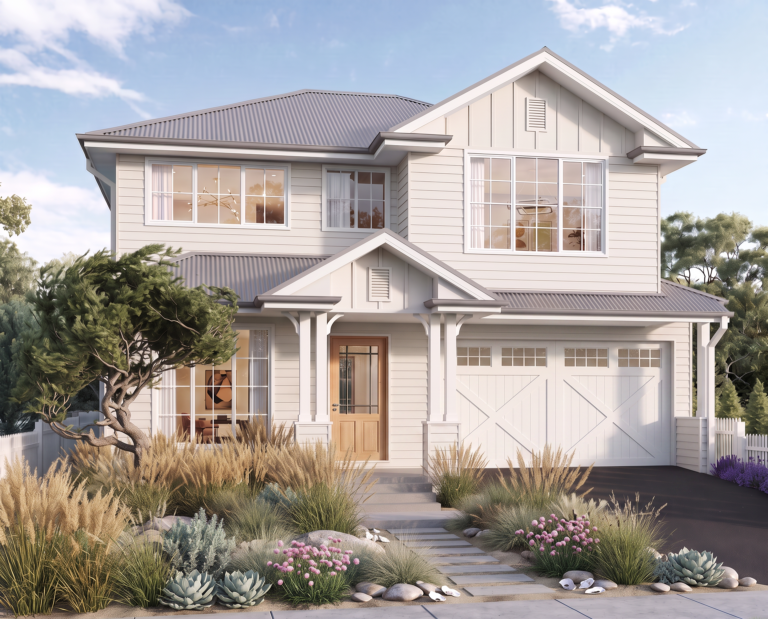
What Is Coastal Farmhouse Design? Interiors, Features & Facades
Wander around any busy inner-Sydney suburb, and you’ll stumble across dozens of bold, quadrilateral custom homes brimming with contemporary cladding and crisp, undulating lines. But venture into less populated regions, and you’ll notice an alternative – the coastal farmhouse. A mainstay of lower-density coastal and country zones, this homely architectural style blends country and coastal…
GET STARTED
Start Your Dream
Home Journey
Feeling inspired?
The first step in your dream home journey starts with a single click.
5 Star Reviews - Google / Facebook
BOOK A TOURFREE CONSULTATION
BOOK A TOURFREE CONSULTATION