
Article • July 21, 2025
Gable vs Hip vs Flat Roofs: Which Style Is Right for Your Home?
By IMSU Team
Choosing which roof to go over your head can be a challenge, it’s almost a permanent decision and can completely change the look of your facade. There’s also much to consider, including design style, drainage, and upkeep, which is why we’ve compiled this guide to roof styles. It breaks down how to determine which style is the right fit for your home.
Download Now
Trending Home
Facade Styles
details
Gable Roofs
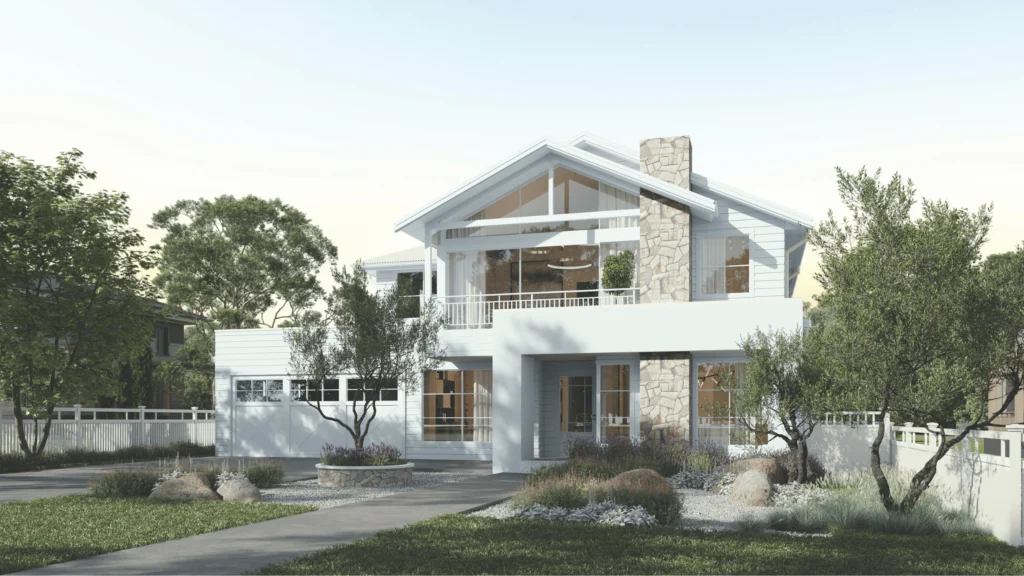
The most iconic roof style of all: the gable. Traditionally, they’ve been the “go-to” roof style for centuries, especially within Western design styles. This roof style is almost synonymous with roofs themself. Gable roofs are characterised by a triangular shape, with two sloped sides meeting at a ridge in the middle. Functionally, they’ve been popular for their ability to shed water and snow into drainpipes, especially back when roof access and drainage solutions were challenging to come by.
Pros of Gable Roofs
- Easy to build and cost-effective
- Strong ventilation capabilities
- Effectively sheds rain and snow
- Widely applicable for a variety of design styles
- Great for solar panels in Australia
Cons of Gable Roofs
- Susceptible to wind damage
- Seen as common in design circles
- Heavy on end walls, requiring stronger framing
- Hard to apply to complex floor plans
Best Materials to Use for Gable Roofs
- Metal Roofing
- Concrete or Terracotta Roof Tiles
Common Facade Styles for Gable Roofs
- Modern Farmhouse
- Modern Coastal
- Hamptons
- Modern Heritage
Flat Roofs
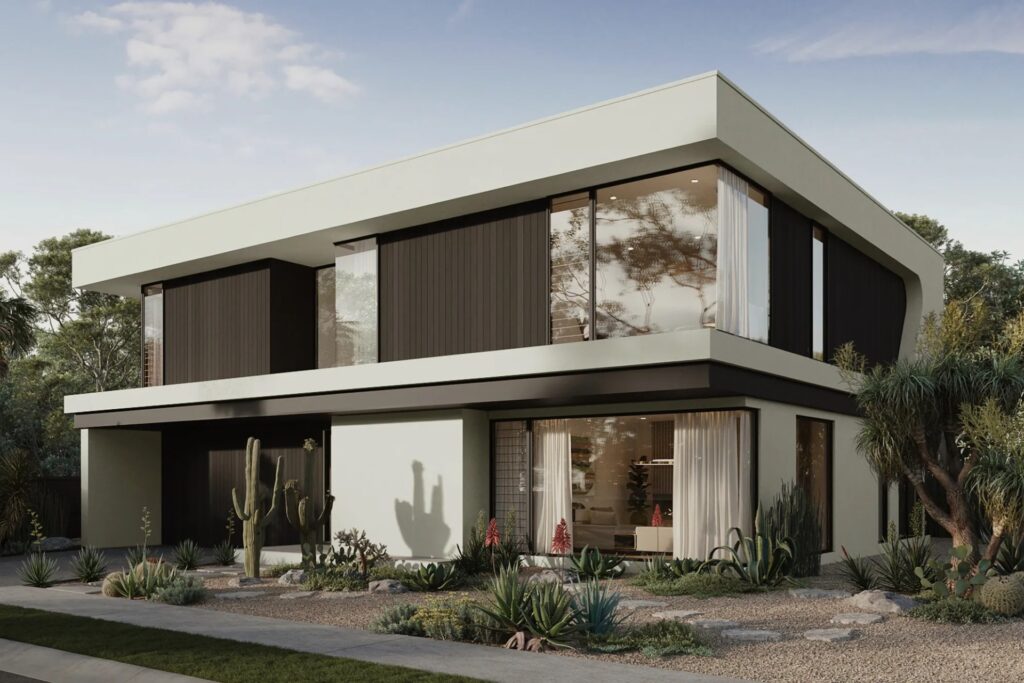
Flat to the eye, but not actually flat (they have slight pitches to create drainage for rain), flat roofs are the up-and-coming hallmark of modern facade design. Especially in Australia, where storms are common and snow is not, these roofs are now as practical as they are beautiful. These roofs are becoming increasingly popular due to their newfound versatility and durability.
Pros of Flat Roofs
- Usable space for rooftop gardens, solar panels, terraces and air conditioning units
- Low construction costs
- Easy/safe access for contractors
- Maximises space for small lots
- Ideal for potential extensions
Cons of Flat Roofs
- Poor drainage
- Shorter lifespan
- Higher maintenance
- Difficult to pair with insulation
Best Materials to Use for Flat Roofs
- Metal Roofing
Common Facade Styles for Flat Roofs
- Mid-Century Modern
- Minimalist
- Japandi
- Box Modern
- Urban Contemporary
Hip Roofs
Likely the most popular roof in Australia, due to their heavy usage in Federation-style homes, Hip roofs are roofs that slant on all four sides, meeting at one central ridge. These roofs create a compact, symmetrical look and provide the most practical drainage of all roof types. These roofs are slowly becoming less fashionable as more daring facades become popularised and other roof formats become more practical.
Pros of Hip Roofs
- Wind Resistant
- Stable and Durable
- Consistent shading
- Balanced look
- Weathering resistant
Cons of Hip Roofs
- Expensive to build
- Limited interior space
- Requires complex drainage
- Difficult to ventilate
- Looks conservative
Best Materials to Use for Hip Roofs
- Metal roofing
- Concrete or terracotta roof tiles
- Slate roofing tiles
Common Facade Styles for Hip Roofs
- Contemporary
- Mid-Century Modern
- Modern Coastal
- Federation

Which Style of Roof to Use
Choosing your roof style depends on several factors, including your budget, design style, and location/climate. However, with modern roofing technology able to effectively withstand most weather conditions, we recommend choosing a roof that best suits your facade style and working from there. If you want to be thorough, it’s always best to book a consultation with a facade builder and get expert advice on which style will suit your needs as well.

Continue Reading
Article • September 14, 2026
IMSU Becomes A Quintuple Finalist at the 2026 HIA NSW Awards
What Is Coastal Farmhouse Design? Interiors, Features & Facades
How to choose your colour scheme for a new build
Start Your Dream
Home Journey
Feeling inspired?
The first step in your dream home journey starts with a single click.